Madhubani Painting is one of India’s most cherished traditional art forms, known for its intricate patterns, bright colors, and deep cultural symbolism. Originating from the Mithila region of Bihar, this folk art has transcended generations—decorating village walls, temple murals, and now canvases around the world. Today, Madhubani Painting for Beginners has become a trending art topic among enthusiasts who want to learn its beauty and cultural depth in a modern way. In this complete guide, you’ll explore its rich history, traditional techniques, and easy designs explained step by step.
Understanding the Roots: The History of Madhubani Painting
The story of Madhubani Painting goes back more than 2,500 years. According to legend, it began during the time of the great Indian epic, the Ramayana. When King Janaka of Mithila asked artists to paint the wedding of his daughter Sita to Lord Rama, the villagers created colorful murals on their walls to celebrate the divine event.
From that moment, the art of Madhubani—literally meaning “forest of honey”—became an essential part of Mithila’s cultural and spiritual life. Traditionally, women practiced this art to decorate walls during festivals, marriages, and religious occasions. Over time, it evolved into one of India’s most recognized folk arts.
As generations passed, this art spread beyond homes. During the 1960s, a drought struck the region, and artists began painting on handmade paper to sell their artwork for survival. This moment marked the global introduction of Madhubani Painting, transforming it from a regional custom into a world-recognized art form.
Symbolism in Madhubani Art: Colors and Motifs
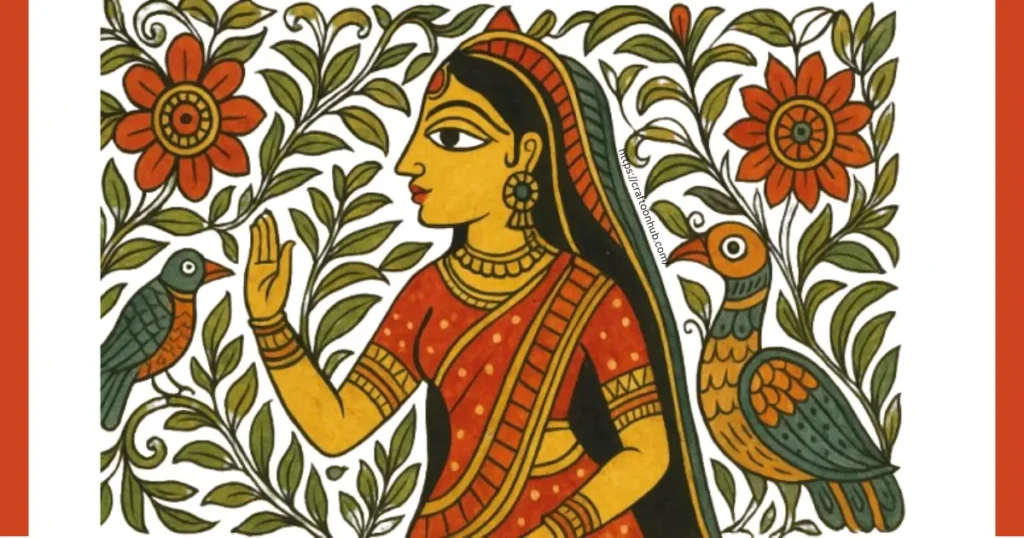
What makes Madhubani Painting truly unique is its deep connection with nature, mythology, and spirituality. Each symbol, color, and line has meaning.
- Nature as Inspiration: Trees, flowers, fish, birds, and the sun symbolize harmony, fertility, and prosperity.
- Mythological Figures: Images of gods and goddesses—like Krishna, Durga, and Lakshmi—are often painted to bless the home.
- Geometric Borders: Circles, triangles, and floral motifs are repeated to create rhythm and balance.
- Five Natural Colors: Traditionally, artists used natural pigments extracted from plants—red from sandalwood, yellow from turmeric, blue from indigo, green from leaves, and black from soot.
Each element in a Madhubani Painting is meant to express devotion, joy, and the balance between life and nature.
Types of Madhubani Painting Styles
Madhubani Painting Techniques differ slightly depending on the community and region. The art is divided into five main styles, each with a distinct look and purpose:
- Bharni Style – Features bright, bold colors and mythological themes, often depicting gods and goddesses.
- Kachni Style – Uses fine linework and minimal color, focusing more on shading and patterns.
- Tantrik Style – Inspired by tantric symbolism, with deities like Kali and Durga painted in intricate detail.
- Godna Style – Originating from tattoo designs, this style features repetitive dots and geometric shapes.
- Kohbar Style – Traditionally painted on marriage walls to bless newlyweds with fertility and happiness.
These styles show how Madhubani Art History and Designs evolved with time, adapting to rituals and beliefs while preserving its essence.
Traditional Madhubani Painting Step by Step
Learning Traditional Madhubani Painting Step by Step is an enjoyable and meditative process. You don’t need expensive tools—just a steady hand, patience, and love for detail.
Step 1: Choose Your Theme
Start by selecting a subject. It could be nature (like peacocks, fish, or trees) or a divine story such as “Radha-Krishna” or “Sita-Rama.”
Step 2: Prepare the Surface
Traditionally, women painted on mud walls or handmade paper coated with cow dung and rice paste. Today, you can use canvas, thick paper, or even fabric.
Step 3: Draw the Outline
Use a pencil to sketch the main figures. Traditionally, bamboo sticks or twigs dipped in black ink were used to make outlines.
Step 4: Add Borders and Patterns
Borders are essential in Madhubani Painting. Fill empty spaces with repeating geometric shapes, leaves, or small flowers to maintain balance.
Step 5: Fill in the Colors
Use vibrant shades like red, yellow, green, and orange. Avoid leaving blank spaces. Every inch should be filled with patterns and color, symbolizing completeness.
Step 6: Add Final Details
Once dry, highlight the outlines with black for definition. Add fine lines to enhance depth and detail.
This process not only helps beginners learn patience but also connects them with India’s cultural artistry.
Tools and Materials Used in Madhubani Painting
While Madhubani Painting for Beginners can start with simple tools, traditional artists still use age-old materials for authenticity.
- Base: Handmade paper, canvas, or walls.
- Colors: Natural dyes or water-based acrylic paints.
- Brushes: Bamboo sticks, nib pens, or fine paintbrushes.
- Black Outline: Made from soot or ink to highlight details.
- Pastes and Binding Agents: Rice powder, cow dung, or gum arabic for surface preparation.
Modern artists often blend natural and synthetic mediums to balance tradition with convenience.
Madhubani Painting Techniques Explained
Let’s explore some core Madhubani Painting Techniques that define this traditional art form:
- Double Line Borders: Artists often use twin lines to outline figures, filling the space between with cross or dotted patterns.
- Fine Line Shading: Thin parallel lines add depth without using shadows.
- Filling Technique: Every empty space must be filled with patterns—dots, lines, vines, or flowers—to create visual harmony.
- Color Harmony: Primary colors dominate, and natural tones are balanced for symbolic meaning.
- Two-Dimensional Effect: Figures are flat without perspective, maintaining the folk aesthetic.
These techniques make Madhubani Painting both structured and expressive—a rare combination of order and creativity.
Easy Madhubani Painting Ideas for Beginners
If you’re new to this art, don’t worry! There are many Easy Madhubani Painting Ideas you can try that look impressive yet simple to make.
1. Floral Mandala Design
Combine lotus and leaf patterns in circular symmetry. It’s easy to paint and looks stunning on canvas.
2. Fish Motif Painting
Fish symbolize good luck and fertility. Paint two intertwined fish with patterned scales using bright reds and blues.
3. Tree of Life
Depict the connection between humans, animals, and nature through a tree filled with birds and flowers.
4. Peacock Design
This is one of the most loved Madhubani Painting for Beginners. Peacocks represent beauty and grace—use blue and green tones to highlight the feathers.
5. Sun and Moon Painting
A half-sun and half-moon design symbolizes balance and duality—ideal for learners exploring symmetry.
Each design carries deep symbolism, allowing artists to express emotion and philosophy through vibrant visuals.
How Madhubani Art Connects Tradition and Modern Life
While Madhubani Painting began as wall art in rural homes, it now adorns everything from fashion fabrics to digital prints. Designers, illustrators, and modern artists are using this style in sustainable clothing, home decor, and branding.
This blend of tradition and innovation shows that folk art can stay relevant even in a digital world. Many artists today earn a living by teaching Madhubani Painting Techniques online or selling their artwork globally—preserving their culture while embracing modern opportunities.
Famous Madhubani Artists Who Preserved the Legacy
The world knows Madhubani Painting because of several pioneering women who brought it to global recognition:
- Sita Devi – The first artist to exhibit Madhubani internationally and win the Padma Shri Award.
- Ganga Devi – Famous for modernizing the art while preserving its traditional heart.
- Baua Devi – Known for her detailed depictions of Hindu deities and festivals.
Their dedication turned a village craft into a symbol of Indian heritage.
Why You Should Try Madhubani Painting
Practicing Madhubani Painting for Beginners is more than just learning a traditional art form—it’s a beautiful journey of mindfulness and self-expression. The rhythmic patterns, symmetrical borders, and vibrant colors naturally bring calmness to the mind while improving focus and patience. Each brushstroke connects you to centuries-old stories and spiritual symbolism, turning every design into a meditative experience.
You don’t need to be a professional artist to begin. With simple materials, creativity, and curiosity, anyone can start exploring the charm of Madhubani Painting. It allows you to express emotions, celebrate nature, and preserve India’s rich cultural heritage at the same time. Whether you paint on paper, fabric, or walls, every artwork reflects devotion and harmony—making Madhubani Painting not just an art practice but also a path to inner peace and cultural connection.
Conclusion: The Everlasting Charm of Madhubani Painting
Madhubani Painting beautifully bridges the gap between the past and the present, carrying forward India’s artistic heritage through colors, symbols, and storytelling. Its intricate patterns reflect unity, devotion, and balance, reminding us of life’s deeper harmony. Whether you’re exploring Easy Madhubani Painting Ideas or practicing Traditional Madhubani Painting Step by Step, this art form nurtures both creativity and cultural pride.
By mastering Madhubani Painting Techniques and embracing Madhubani Art History and Designs, you’re not just creating art—you’re keeping an ancient tradition alive. Each painting becomes a timeless expression of devotion and imagination. So, take your brush, let your colors flow, and allow the spirit of Mithila to tell stories that never fade.
FAQ Related to:
What is the history and origin of Madhubani Painting in India?
Madhubani Painting originated in the Mithila region of Bihar, India, over 2,500 years ago. Legend says King Janaka commissioned artists to decorate walls during his daughter Sita’s wedding to Lord Rama. Since then, the art has been passed down through generations of women, who used it to express devotion, joy, and community life. Over time, it evolved from wall murals to paper and canvas art, becoming a global symbol of India’s rich cultural heritage.
What are the main Madhubani Painting Techniques used by artists?
Artists use several Madhubani Painting Techniques, such as double-line borders, fine line shading, and filling every space with geometric or floral patterns. The artwork is two-dimensional, with bold black outlines and vibrant natural colors. Traditional tools include bamboo sticks, nib pens, and handmade brushes, creating detailed and symmetrical designs that reflect discipline, creativity, and cultural symbolism.
How can beginners learn Traditional Madhubani Painting Step by Step at home?
Beginners can start by sketching simple designs like flowers, fish, or peacocks. Use handmade or thick drawing paper and outline with a black pen or brush. Then, fill your design with bright colors—red, green, yellow, and blue are traditional choices. Don’t leave blank spaces; fill them with dots, lines, or tiny motifs. With practice, you’ll learn Traditional Madhubani Painting Step by Step, improving your focus and creativity with every artwork.
What are some Easy Madhubani Painting Ideas for beginners?
Some Easy Madhubani Painting Ideas include painting the Tree of Life, peacock motifs, the sun and moon, or floral mandalas. These designs are beginner-friendly and visually stunning. You can also experiment with geometric borders and bright color combinations. Start with smaller projects like greeting cards, bookmarks, or wall frames to gain confidence before moving to larger canvases.
Which materials and colors are best for Madhubani Painting for Beginners?
For Madhubani Painting for Beginners, you’ll need thick handmade or cartridge paper, watercolor or acrylic paints, black ink pens or markers, and fine brushes. Traditionally, artists used natural dyes made from plants, turmeric, and soot. However, beginners can easily use ready-made paints for convenience. Always choose vibrant, contrasting colors to maintain the traditional charm and liveliness of Madhubani art.
What makes Madhubani Art History and Designs unique compared to other Indian folk arts?
Madhubani Art History and Designs stand out because of their symbolic storytelling, symmetry, and use of natural themes. Unlike many other folk arts, Madhubani doesn’t leave any space blank—every inch is filled with patterns and color. It’s also deeply spiritual, blending nature, mythology, and geometry in a harmonious way. This connection between creativity, culture, and mindfulness makes it truly timeless and unique.